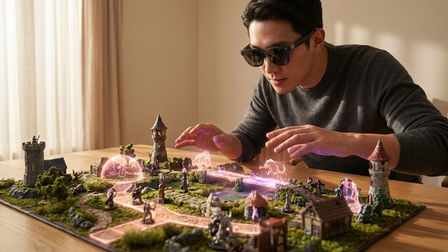
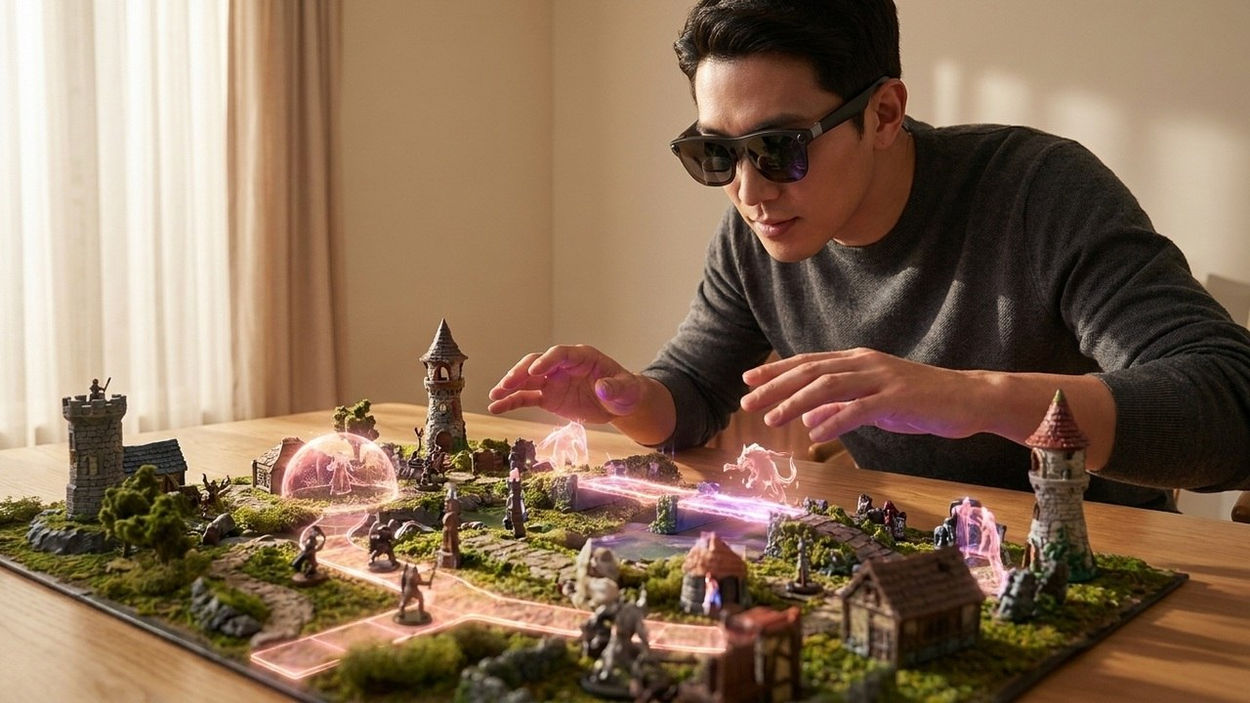
Xreal Aura is one of the more interesting Android XR devices coming up, mostly because it is not trying to be just another tiny notification glasses thing. The specs point toward something closer to lightweight spatial computing glasses: Android XR, Gemini, hand tracking, optical see-through display, a 70-degree field of view, dual Sony Micro-OLED panels at 1,920 × 1,200px per eye, 120Hz refresh, and a separate compute puck with the new Snapdragon Reality Elite chip. GSMArena also lists 12/256GB and 16/512GB configurations, a 4,455 mAh puck battery, and launch planned for fall 2026 with pricing under $1,500 before taxes.
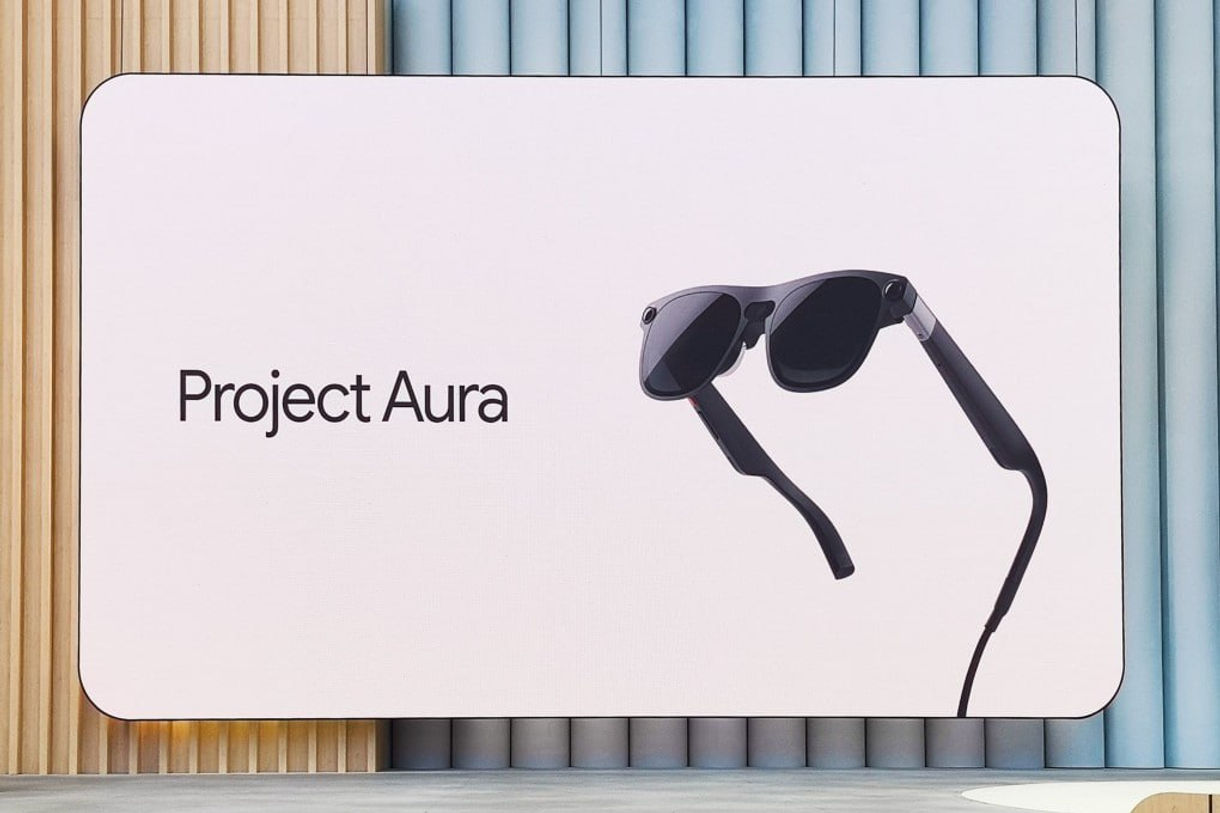
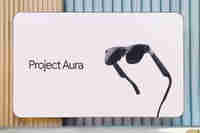
That hardware shape matters for games because the weight, battery, and main compute are not all sitting on your face. If the display and hand tracking are good enough, tabletop games become one of the cleaner ways to explain why this form factor is interesting.
More importantly for us: Xreal has already shown real games running on it. Demeo was one of the titles mentioned in the early Aura coverage, which makes sense. A tabletop RPG is almost the perfect test case for this kind of device. You do not need to sprint around a room. You need a stable board, readable pieces, comfortable hand interaction, and enough presence that the table in front of you feels alive.
So I started thinking about which current Quest games would translate best to Xreal Aura if developers decide to support it.
This is not a confirmed launch list. Treat it as a wishlist / compatibility imagination exercise based on the type of games that already work well as tabletop VR or mixed reality experiences on Quest.
First, why Demeo is the obvious proof point
Demeo is already the clean example here. It is a turn-based tabletop fantasy adventure from Resolution Games with dice rolls, miniatures, cards, classes, campaigns, co-op,.
The format fits spatial glasses because the action lives on a board. You can lean in, inspect the dungeon, move pieces, plan turns, and talk with friends without needing full body movement. On a headset like Quest, that already works. On lighter glasses, the fantasy is even clearer: the dungeon sits on your desk, and you still see your room around it.
That is the template I would use for the rest of this list.
1. Toy Monsters


Toy Monsters feels like one of the strongest candidates because it was built around mixed reality and hand tracking from the start.
It is basically a tabletop tower defense game where you place toy defenders, stop waves of monsters, use magical powers, and interact with the battlefield using your hands. The Quest version already supports passthrough, hand tracking, controllers, and fully immersive VR, so the basic design language is very close to what Xreal Aura seems to be chasing.
The only question is input precision. If Aura gets hand placement right, this could be an easy “oh, I get it” demo.
2. Puzzling Places


Puzzling Places might be the safest pick on this list.
It is a relaxing 3D jigsaw puzzle game built from scanned real-world places. You assemble detailed dioramas piece by piece, either alone or with another player, and the game has already added features like hand tracking, passthrough, multiplayer, and local mixed-reality co-op over time.
A puzzle made from real scanned places is not hard to explain, and on glasses the fun version is obvious: your desk becomes a little restoration table.
3. Spacefolk City


Spacefolk City is older, but the idea still feels very right for spatial glasses.
It is a funky city builder where you construct a floating city in space, decorate it with absurd objects, and manage little Spacefolk citizens before their sun goes supernova. It already uses VR spatiality well because you are not building on a flat monitor-like grid. You are placing buildings above, below, and around a floating structure.
This one could be especially nice if Aura supports quick sessions well. Open the city, fix a few things, decorate, close it. Not every XR game needs to demand your whole evening.
4. Le Dino Labo


Le Dino Labo is a newer mixed-reality puzzle game where you rebuild dinosaur skeletons bone by bone in your own space. Once completed, the dinosaurs can be viewed at life-size scale, which is a very strong XR hook.
It is also educational without looking like homework, which is harder to pull off than it sounds.
This is probably the most mainstream demo pick here. You do not need to explain roguelites, deckbuilding, or VR comfort settings. You say: put dinosaur bones together, then see the dinosaur in your room. Done.
5. Banners & Bastions


Banners & Bastions is another tabletop strategy game that feels built for this type of hardware.
It is a mixed-reality tabletop RTS / roguelite where you defend a kingdom against waves of enemies. You build an economy, place units and defenses, use spells, and react to procedurally generated terrain. The game supports hand tracking and controller input, and the Quest page describes it as early access.
The caveat is that RTS games need quick, confident input. If Aura’s hand tracking and gesture stack is good enough, this could be a very fun “commander at the war table” experience.
I would not expect glasses like this to replace every kind of Quest game. Fast shooters, heavy melee games, big locomotion adventures, and fitness games are still more natural on a full VR headset. But tabletop strategy, spatial puzzles, cozy creation games, and educational mixed-reality toys could benefit a lot from a lighter form factor.
Demeo being shown already is not random. It is the right kind of game for the device.
If Xreal and Android XR can make the input feel solid, the next wave of good Aura games may look less like “VR ports” and more like tabletop mixed reality games, toys, puzzles, and little worlds that live in your room.